The Gumroad RSC experiment
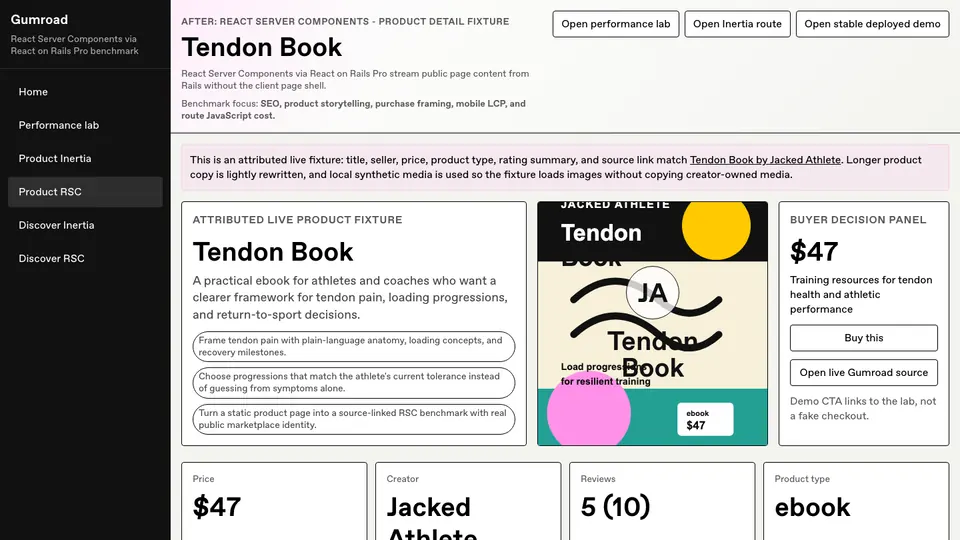
See the live product pages, PageSpeed reports, and recorded interactions comparing React Server Components with client-rendered Inertia.
Read the main article →Give coding agents a public Rails 8 + React 19 foundation instead of a blank prompt. Use ShakaPerf to measure each optimization and keep only changes it proves faster and visually stable.
Two essential reads on Rails + React performance: the experiment and the evidence behind it.
See the live product pages, PageSpeed reports, and recorded interactions comparing React Server Components with client-rendered Inertia.
Read the main article →Inspect the repeated measurements, rendering choices, and trade-offs behind the experiment.
Read the technical reference →Ambitious changes cross rendering, data, bundles, browser behavior, and deployment. Without conventions and measurement, speed becomes guesswork.
Blank-prompt code drifts. Conventions, typed boundaries, working examples, and repository instructions keep ambitious changes coherent.
RSC, streaming, data loading, browser tests, bundles, and deploys all have to work as one Rails application.
A change is not an improvement until repeatable measurements show it is faster and visual checks show it is still correct.
Let agents move fast. Keep Rails in charge. Require proof before a performance change survives.
ShakaCode has worked on Rails + React systems since 2011 and maintains projects with more than 23 million combined gem downloads. Try the software, read the source, and judge the work before you buy anything.
Give an agent a working architecture, explicit guardrails, and examples it can extend. Or open the live deployment to see the result first.
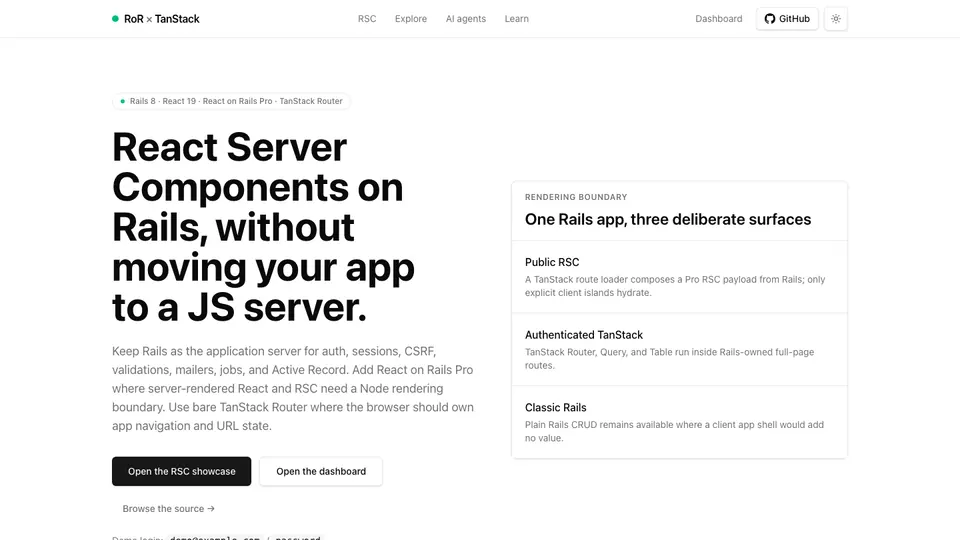
The public Rails 8 starter combines React on Rails Pro, React 19, supported GA React Server Components, streaming, and TanStack Router, Query & Table. Its shared shadcn/ui layer provides buttons, dialogs, inputs, tables, tabs, and toasts styled with Tailwind CSS.
Rails stays the application boundary. Add the React and TanStack pieces you need without adding a second server tier.
React on Rails and Shakapacker build. E2E on Rails tests behavior. ShakaPerf proves performance and visual stability. Control Plane Flow deploys. Every project includes public source or docs an agent can read.
Bring React 19 and modern rendering to Rails.
Start with the MIT-licensed React on Rails 17.0.0 core for components, server rendering, and hydration. When you need more, React on Rails Pro adds supported GA React Server Components, streaming SSR, fragment caching, and a dedicated Node renderer without forcing Rails behind a separate frontend app.
Keep Rails' conventions and productivity. Add React 19, RSC, and the TanStack libraries where they make the product better.
Add React on Rails Pro and the TanStack libraries you want to the app you already have. Keep your routes, conventions, and team while adopting the UI page by page.
Begin a new Rails app and mix exactly what you want, per page: classic Rails views, React on Rails components, React 19 + RSC, and TanStack. Use as much or as little as you need.
Rails conventions, typed contracts, and the starter's AGENTS.md let agents build ambitious features without starting from a blank prompt. Humans still own product decisions and review.
ShakaPerf closes the loop: agents iterate, and only changes verified faster and visually stable are kept.
Every piece of the stack is free to read, install and evaluate, and the whole stack runs free in production for small organizations. Larger organizations subscribe to ShakaStack Pro.
React on Rails, Shakapacker, and E2E on Rails are MIT. Control Plane Flow is LGPL 3.0. Use them anywhere, at any organization size.
React on Rails Pro is free in development, test, CI and staging for everyone. Both products are free in production for organizations under 10 people, $1M revenue and $1M raised, plus charities, schools and hospitals at any size. Larger organizations subscribe: $1,800 per year per organization covers React on Rails Pro, ShakaPerf (for organizations under 250 people and under $10M revenue) and Slack support from the maintainers, for every app and developer. No license key is needed to run either product.
No keys, no activation, nothing phones home. Whether you owe a subscription is a good-faith call your organization makes, and terms never tighten on a version you already have.
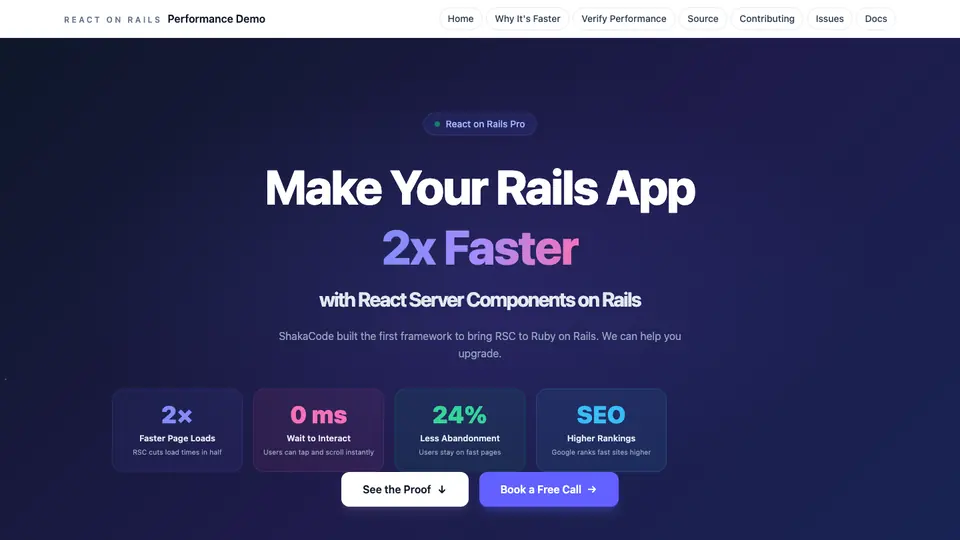
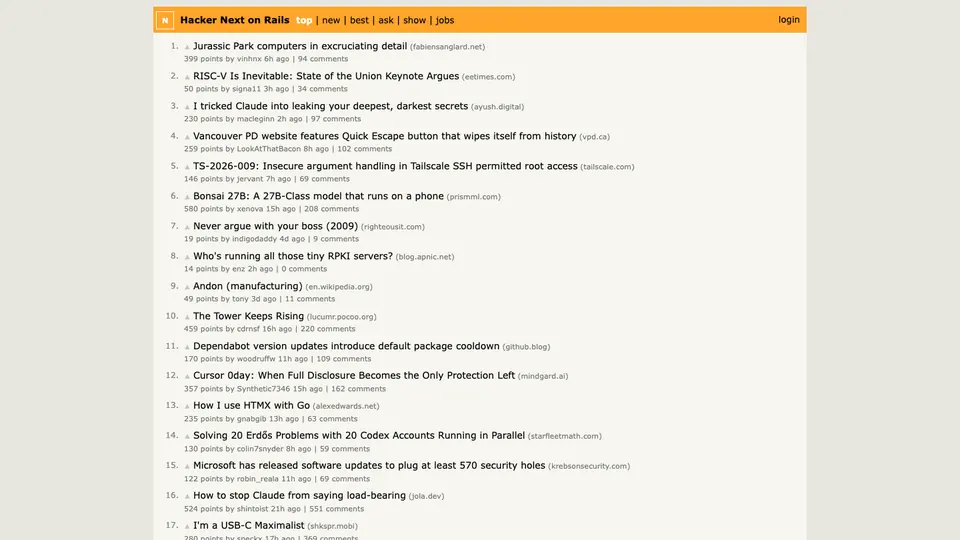
Open a live demo, inspect its public source, or fork the starter.
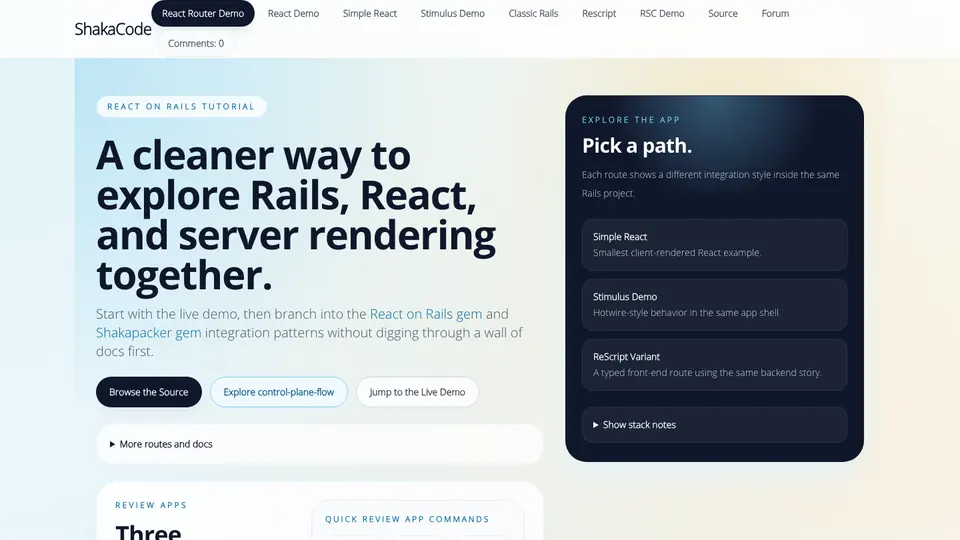
The original full-app React on Rails tutorial, using Shakapacker with server rendering.
More React on Rails demos at reactonrails.com/examples →
The starter, demos, source, and docs are public. If advanced rendering or production help earns a place in your project, React on Rails Pro and the maintainers are there.